
The Upstream Events Nobody Puts in a Rights Deal
The documents that move money through combat sports — sanctioning agreements, promotional contracts, media rights term sheets, antitrust filings — never cite Jigoro Kano or Gichin Funakoshi. They do not need to. The organizational logic those men created is already baked in: the single governing body issuing ranks and rules, the affiliated academy network paying fees upstream, the international federation lobbying for Olympic status. Every structural feature that makes modern combat sports commercially legible has a specific origin date. Six of them do most of the explanatory work.
1882 — Kano opens the Kodokan. When Jigoro Kano founded the Kodokan in Tokyo in 1882, he was not simply teaching judo. He was inventing the institutional template that every subsequent combat-sports governing body would copy: a single recognized headquarters, a centralized ranking authority, an affiliated-school network, and a curriculum standardized enough to export. The Kodokan's affiliate model — schools certified by the center, instructors credentialed by the center, students ranked by the center — is the direct ancestor of Gracie Barra's franchise fees, the IBJJF's membership dues, and the belt-grading revenue that flows upward through every global gym network today. Before Kano, martial arts transmission was informal and local. After him, it was an organizational product that could be licensed, scaled, and monetized. The International Judo Federation, which now governs the sport across more than 200 national federations, is simply the Kodokan model applied at sovereign scale.
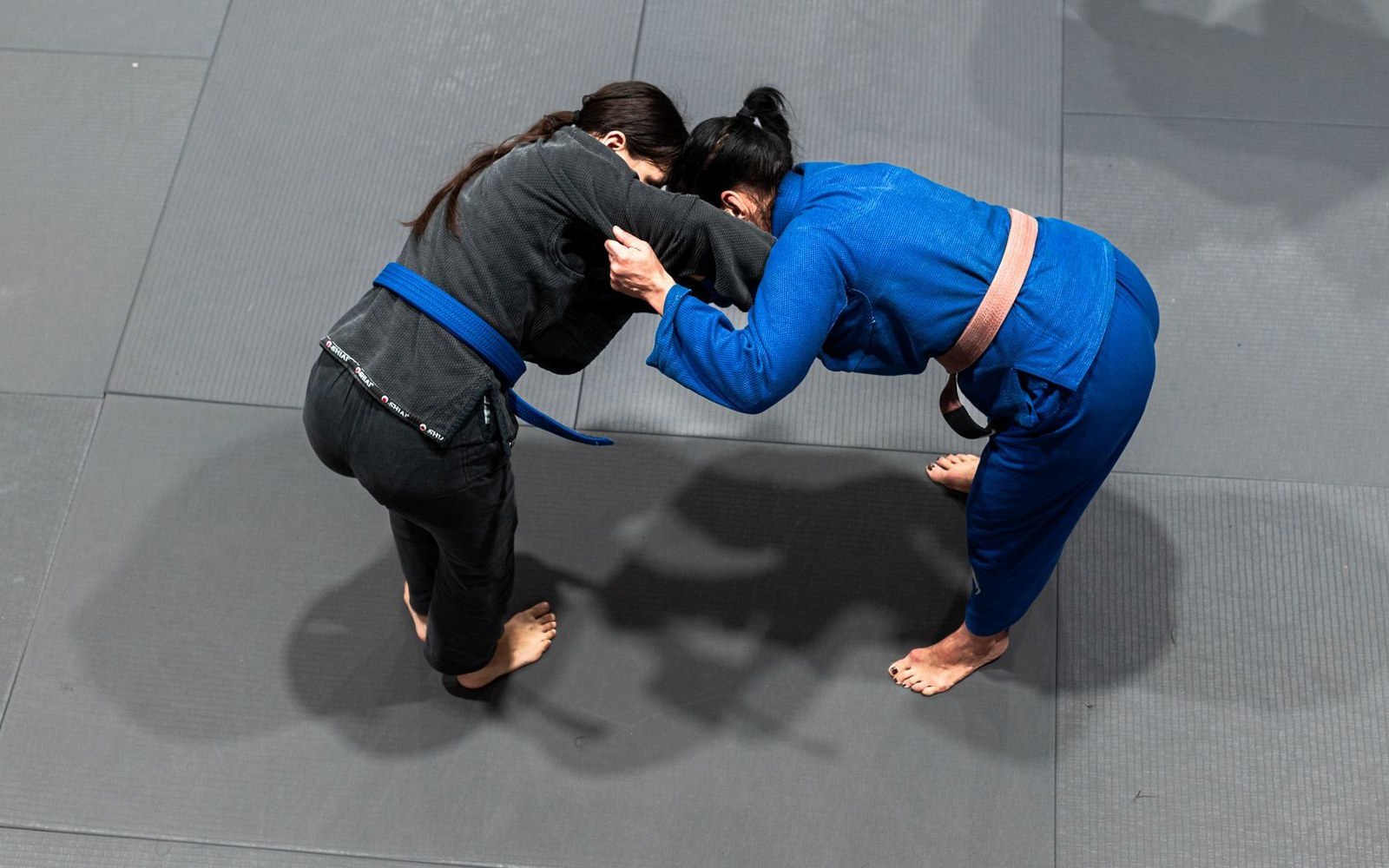
1917 — Maeda begins teaching Carlos Gracie. Mitsuyo Maeda, a Kodokan-trained judoka who had spent years competing commercially in Europe and the Americas, settled in Belém, Brazil, and began teaching Carlos Gracie. The year is given in Brazilian jiu-jitsu historiography as approximately 1917. What came out of that instruction was not just a grappling art with an emphasis on ground fighting — it was, eventually, the affiliate-fee model in its most commercially developed contemporary form. Gracie Barra alone operates hundreds of academies worldwide, each paying licensing fees to the parent organization. The IBJJF runs a competition circuit whose entry fees, membership charges, and mat costs routinely exceed the prize money it pays out — a structure that the Le v. Zuffa antitrust case would later echo in a different context, where the entity controlling competition also controlled athlete access. The BJJ economy — gyms, competition circuits, instructionals, belt certifications — exists because Maeda carried the Kodokan model to Brazil and the Gracie family rebuilt it into something with a franchise architecture.
1922 — Funakoshi demonstrates in Tokyo. Gichin Funakoshi's 1922 demonstration at the First National Athletic Exhibition in Tokyo marks the moment Okinawan karate entered the Japanese mainland institutional apparatus. Within a decade there were university clubs; within two, competing national organizations. The proliferation that followed — Shotokan, Goju-ryu, Wado-ryu, Kyokushin, and dozens of subsidiary organizations each controlling their own rankings and certifications — is the reason karate has never consolidated under a single governing body capable of holding Olympic status on stable terms. The commercial consequence is legible right now: karate was included at Tokyo 2020 and removed for Paris 2024, in part because the IOC could not identify a single governing body with uncontested authority over the sport's rules and representation. Fragmented governance produces fragmented media value. That pattern was set in the decade after Funakoshi's Tokyo demonstration.
1949 — Ip Man arrives in Hong Kong. Ip Man crossed from the mainland to Hong Kong in 1949 following the Communist victory in the Chinese Civil War. His decision to teach Wing Chun openly — breaking with the tradition of closed, lineage-restricted transmission — put a southern Chinese martial art into a colonial port city with access to global Chinese diaspora networks, British institutional infrastructure, and eventually Hollywood. The commercial lineage runs directly to Bruce Lee, who trained under Ip Man before emigrating, and from Lee to the global action-film industry that made martial arts a recognizable consumer category in the West. Without that consumer familiarity — the visual language of striking arts that Lee's films established — it is genuinely unclear whether a cable television audience in 1993 would have had the cultural vocabulary to process what UFC 1 was selling. Ip Man's open-door teaching decision is the upstream event behind the brand value of the striking arts as entertainment product.
1955 — The nine kwan become taekwondo. Under pressure from the South Korean government, the nine original Korean martial arts schools — the kwan — agreed in 1955 to consolidate under a single name. That name, taekwondo, was a political product before it was a sporting one. The organizational consequence was World Taekwondo, an international federation with enough governmental backing to achieve Olympic inclusion in 2000 and hold it continuously since. The commercial lesson is precise: state-mandated consolidation produced the unified governing body that fragmented arts like karate never achieved, and unified governance is what the IOC actually purchases when it grants a sport a slot on the programme. Olympic status delivers broadcast rights, national federation funding, and the government subsidy pipelines that sustain elite athlete development. Taekwondo has all of it. Karate, which never completed its equivalent consolidation, lost its slot.
12 November 1993 — UFC 1, Denver. The first Ultimate Fighting Championship event, held at the McNichols Sports Arena in Denver, Colorado, was marketed as a tournament to find the world's most effective martial art. Its actual commercial function was to create a single promotional entity with exclusive control over a new competitive format. The organizational logic — one promoter, exclusive multi-fight contracts, proprietary rules, vertically integrated media rights — was recognizable to anyone who had watched Bob Arum build Top Rank or Don King build his promotional empire in boxing. What was new was the willingness to hold the ruleset itself as a competitive asset rather than defer to any external sanctioning body. That decision is why, three decades later, TKO Group Holdings can negotiate media rights for the UFC as a unified product rather than as a collection of sanctioned bouts whose regulatory framework is owned by a third party. Every subsequent antitrust argument about fighter contracts, every revenue-share comparison to unionized leagues, every debate about who controls the rules under which athletes compete — all of it runs back to the organizational choice made on November 12, 1993.