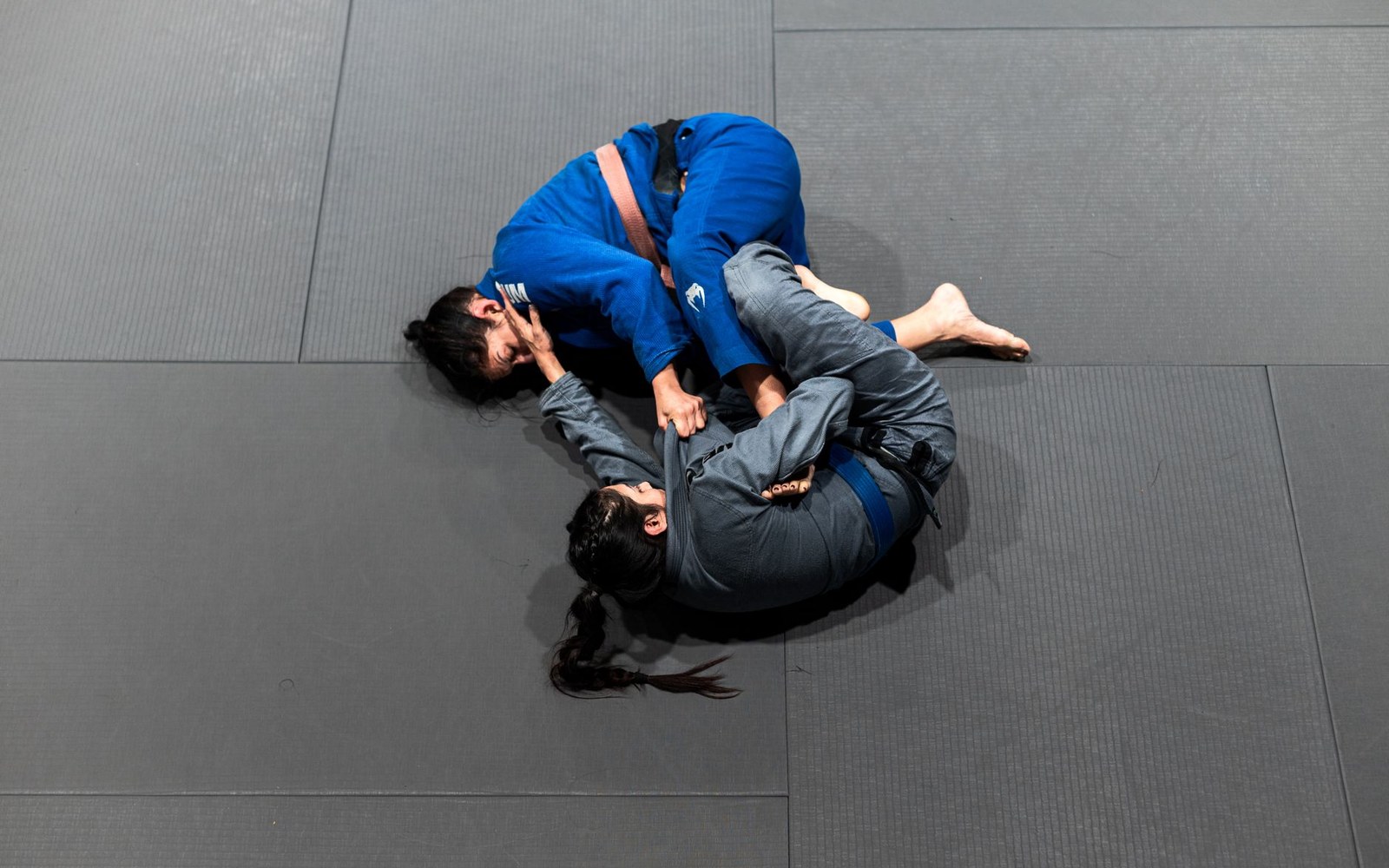
What the Sequence Actually Changed
The International Judo Federation published major rule revisions in 2010, 2013, 2017, and 2024, each cycle arriving with stated justifications about spectator appeal, athlete safety, or competitive integrity. Read together, the amendments tell a consistent story: the IJF has progressively narrowed the techniques that score, while compressing the time available for groundwork.
The 2010 revision began dismantling the scoring ladder, reducing yuko to little more than a tiebreaker until it was removed entirely in 2013. The same revision banned leg grabs when used as a primary attack. Techniques such as kata-guruma — executed by reaching between or around the opponent's legs — that had appeared at World Championship level were overnight reclassified as prohibited. The IJF framed this as protecting the sport's identity: judo is a jacket-wrestling discipline, not a wrestling one. The practical effect was the immediate disappearance of a cluster of effective throws from elite competition.
The 2013 revision completed the yuko removal and introduced golden score — continuous sudden-death overtime — to replace the earlier decision-based tiebreaker. It also extended the leg-grab prohibition to defensive techniques, meaning a judoka who instinctively grabbed a leg while being thrown received a shido penalty. Referees at the IJF World Tour now had a wider set of negative behaviors to penalise, and matches increasingly turned on penalty accumulation rather than positive scoring.
By 2017, the IJF had accumulated enough criticism from the judo community over defensive fighting to act on it. The revision sped up the application of shido penalties for defensive fighting, and it removed the ability to score waza-ari from ne-waza (groundwork) in the same way a standing throw scores. The groundwork window was already short by international standards; the 2017 rules tightened the referee's discretion for extending it further, producing shorter ground sequences on the mat. At the 2017 IJF World Judo Championships in Budapest, the practical effect was visible: analysts noted fewer sustained ground exchanges than in the preceding cycle.
The 2024 revision arrived with a different emphasis. The IJF reintroduced ne-waza from standing grips — allowing a player to drop directly into groundwork under certain conditions — reversing a restriction that had stood since 2013. The stated rationale was restoring dynamism and rewarding proactive athletes, language the federation has deployed across multiple amendment cycles. The revision also adjusted the uniform specifications, tightening allowable sleeve width, which affects grip strategies coaches had developed in response to earlier rule changes.
What the Pattern Reveals
The cumulative effect across four revisions is a competition environment substantially different from the pre-2010 sport. Techniques drawing on leg attacks, which are core to freestyle wrestling and to older judo kata, are absent from World Tour competition. Groundwork, the domain where judo's lineage to Brazilian jiu-jitsu is most visible — Mitsuyo Maeda, who brought the discipline to Brazil, was himself a ne-waza specialist — occupies less of each contest's runtime than it did a generation ago.
The IJF is the International Olympic Committee's recognised governing body for judo, and the Olympic programme creates a structural incentive for rules that photograph well and produce clear, explosive outcomes in a broadcast window. Whether the 2024 attempt to restore ground grappling reverses the drift can be checked in the IJF's own published competition results and technical circulars, which track technique usage across World Tour events. What is not in dispute is that the IJF has shown a willingness to rewrite its technical standards every few years — faster than most Olympic federations, and with measurable consequences for which athletes, and which national systems, the rules favour.