
Two Systems, Two Definitions of Winning
The International Brazilian Jiu-Jitsu Federation runs the largest gi competition circuit in the world on a points system: takedowns, sweeps, guard passes, and positional control all accumulate on a scorecard. A fighter who never attempts a submission can win a world title by moving efficiently and stalling from dominant positions. Critics call this incentive structure responsible for the modern phenomenon of grip-fighting, stalling, and guard-pulling that dominates gi competition at every level. Defenders argue it rewards precision and positional mastery that submissions alone would obscure.
The ADCC Submission Wrestling World Championship, administered out of Abu Dhabi, runs submission-only with a structured concession: points are introduced only in the final five minutes of regulation after a scoreless first half. Who's Number One events go further, running pure submission-only — no points, ever — with overtime periods to break draws. Under either submission-focused model, a fighter who pulls guard and collects no submission attempts does nothing; there is no positional dividend to harvest.
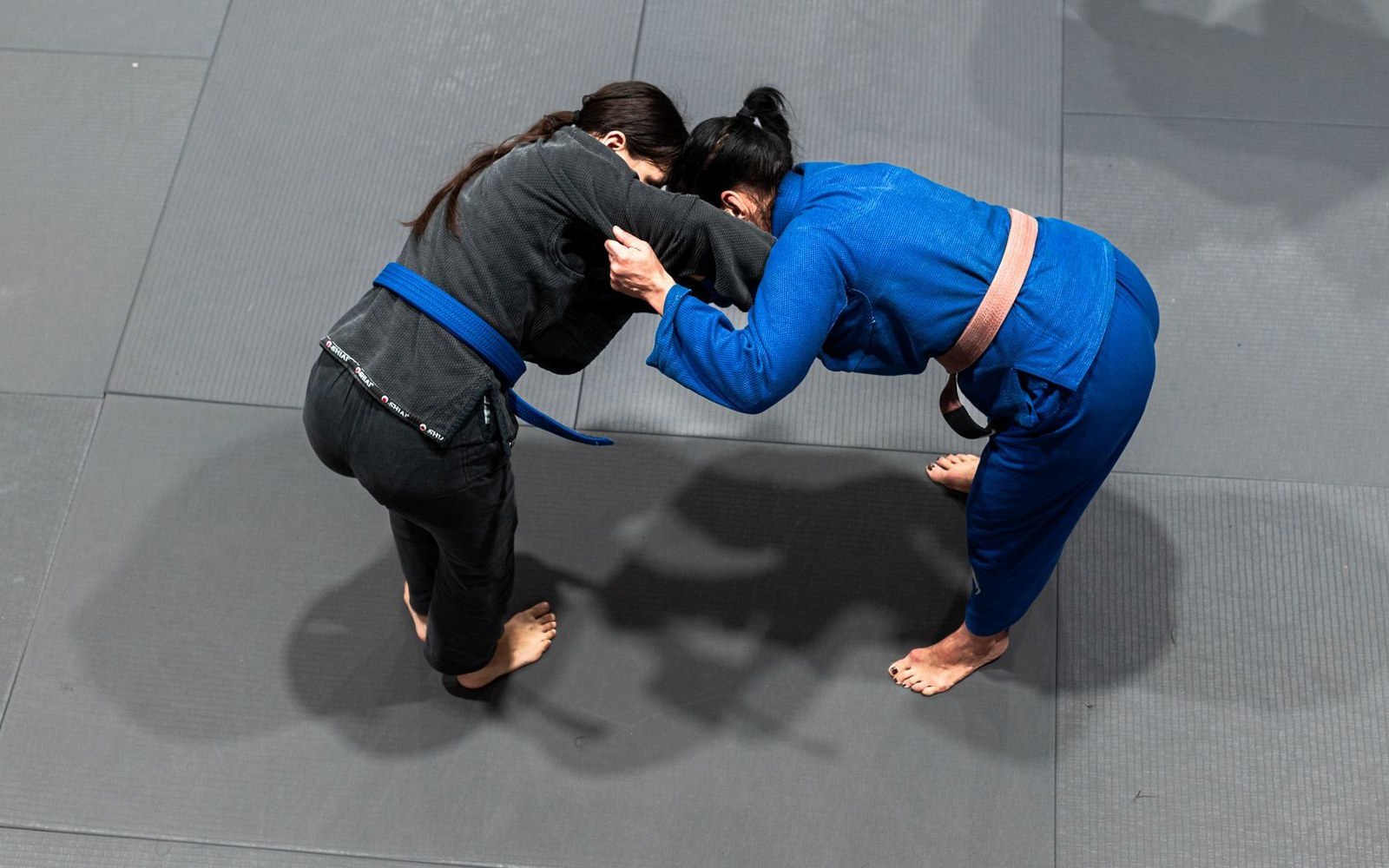
The practical divergence shows in training rooms. Points competition rewards a fighter who can pass guard once and hold side control for two minutes; submission-only rewards whoever is more dangerous off their back, because defensive movement becomes offensive leverage. The rulesets do not merely measure the same sport differently — they develop different athletes.
Who Runs What, and Why the No-Gi Circuit Chose One Side

The IBJJF's control over the gi circuit is structural. It owns the World Championship and the most lucrative regional calendars, so academies preparing students for those events train the IBJJF points game. The affiliate-fee model that governs gym networks like Gracie Barra reinforces this: curricula flow through the federation's framework.
No-gi has no equivalent institutional anchor. ADCC is the sport's prestige ceiling, but it runs biennially and invites a small field. Polaris, Who's Number One, and other independent promotions fill the calendar gap, and most have defaulted to submission-only because it produces more commercially watchable matches — and because no single body controls the format. The absence of a governing monopoly in no-gi is precisely what let the submission-only ruleset spread.
The result is two circuits that share vocabulary — guard, mount, rear naked — but operate as distinct competitive disciplines with different financial incentives, different champion profiles, and different answers to what the sport is for.