
A Standard Nobody Is Required to Follow
The Unified Rules of MMA emerged from meetings led by the New Jersey State Athletic Control Board, with the Association of Boxing Commissions and other regulators, in 2000, giving the sport a workable framework at a moment when several states had banned it outright. The rules defined the fighting area, the weight classes, the fouls list, and the 10-point must system for scoring rounds. The Association of Boxing Commissions subsequently adopted them as a model code, and most American jurisdictions followed — giving the sport something that looked, from a distance, like federal coherence.
It is not federal coherence. The ABC is a voluntary membership organisation with no regulatory authority of its own; it sets recommended standards that member commissions may adopt, ignore, or modify at will. A commission in Florida or Texas is sovereign within its own jurisdiction. It can license a fight under its own rules, depart from the fouls list, and no one at the federal level has standing to object.

The 2017 amendments sharpened several problem areas: clarified what constitutes a grounded fighter for the purpose of the no-soccer-kick rule, redefined the fence-grabbing foul, and introduced a more granular framework for how referees should handle accidental fouls that produce stoppages. Those amendments were the product of real technical work inside the ABC's MMA committee. But adoption was again voluntary, and the gap between states that updated their rules and states that did not created a patchwork that persists today.
Where the Patchwork Bites
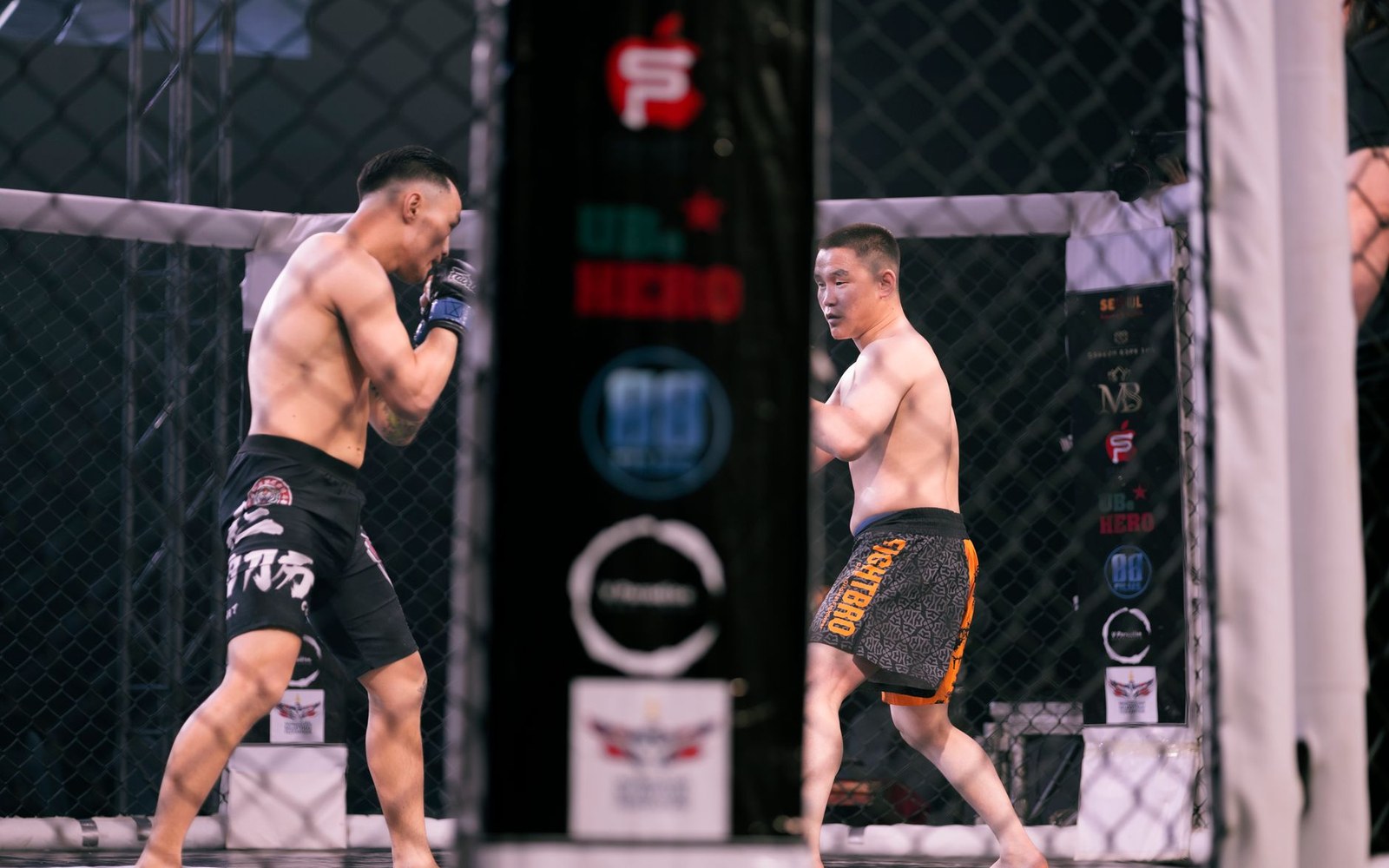
The practical consequences are modest in most bouts — major commissions in Nevada, California, and New York operate under functionally similar rules — but they surface in specific situations. Open-palm strikes, the definition of a downed opponent, and the treatment of 12-to-6 elbow strikes all carry slightly different interpretations depending on jurisdiction. Referees are licensed by individual commissions and trained to the standards of that commission. A referee working under the Nevada State Athletic Commission's guidelines applies Nevada's reading of the unified rules, not a pan-American standard.
Judges present the same problem. The Nevada State Athletic Commission and the California State Athletic Commission both use the 10-point must system, but judging criteria — effective striking, effective grappling, aggression, cage control — are weighted differently in practice, and neither commission has a binding obligation to harmonise with the other. Scoring controversies that follow major UFC events in Las Vegas versus those that follow Bellator cards in California reflect, in part, this absence of a common adjudication standard.
The UFC's position inside this structure is worth noting clearly. TKO Group Holdings, the public company that owns the UFC alongside WWE under an Endeavor-engineered merger, operates globally and must conform to local commissions wherever it promotes. In Nevada and New York it works with mature, well-resourced regulators. In some international jurisdictions it either works with local athletic bodies of uneven quality or, in markets without combat sports regulation, effectively self-regulates. The commission patchwork is a domestic problem; the international version is more acute.
What would fix it is a federal combat sports commission — proposed repeatedly, never enacted. The Muhammad Ali Boxing Reform Act, passed in 2000 to address boxing's specific contracting abuses, gave the Federal Trade Commission and the Department of Justice tools against sanctioning-body overreach but created no unified regulator for either boxing or MMA. Proposals to extend something like it to MMA have stalled in committee more than once. Until legislation passes, the sport's governing document is whichever rulebook the commission in the state where the fighter happens to be standing has chosen to adopt.